When we talk about returning from abroad, the conversation most often begins with what is visible and tangible: job, position, lifestyle, circumstances… These are always the initial topics – logical, concrete, measurable.
However, after some time, the focus begins to shift significantly, and the questions become different: what do people actually bring back with them, and what of that remains once everyday life is reestablished?
Through conversations with members of our community, it became clear that the answer rarely fits into a single word. Knowledge and skills are certainly part of it, but far from the only ones, because what people bring back is often less visible, but more long-lasting: ways of thinking, approaches to work, a greater sense of personal freedom, and a different perspective on failure and security.
To explore this topic more deeply, we asked part of our community three key questions: what they learned abroad, what they do differently today, and what changes they have introduced here.
The diverse responses we received show that what people bring back with them is not easy to define, it is, in fact, a process.
What is actually “brought back”
Many people first mention what feels tangible: knowledge, experience, professional standards. But even so, it quickly becomes clear that it’s not just about new information, but about a different relationship to work and to people.
“I came back enriched by the people I met, as well as by my approach to work and my work ethic. I learned that effort, dedication, and your time are truly valued.”
— Tanja V.
For some, this shift goes a step further, shaping the way they think about the problems they solve:
“Given that I studied engineering, I learned that solving a problem does not depend solely on technical knowledge, but also on understanding the needs, knowledge, and perspectives of those whose problem we are solving. This experience made me more concrete and focused on practical solutions. In addition, I became familiar with approaches and concepts (such as blue-green solutions) that I had not previously encountered in Serbia.”
— Đorđe Ogrizović
Changes are not immediately visible
What changes the most, however, is often not something that can be easily described in a single sentence — because it relates to ways of thinking and approaches to personal development.
“Today, I don’t just consume knowledge — I question it, connect it with knowledge from other fields, experiment, and create my own knowledge… and recently I’ve started sharing my knowledge and experience. I really enjoy doing that.”
— Uroš
For some, this also means a different relationship to external influences:
“I don’t listen to pessimists anymore; they don’t scare me — I see that as their belief system. My life is significantly better.”
— Valentina Sofijanić
How changes “translate” into everyday life
Over time, these internal changes begin to show in very concrete ways: in decision-making, responses to change, and attitudes toward failure.
“Thanks to my time abroad, I have developed a much higher tolerance for change, both in life and professionally. I adapt more quickly when circumstances shift, I’m able to look at things from multiple perspectives, and I don’t need to have all the answers before making a decision. I no longer see setbacks as obstacles, but as part of the process that leads to success.”
— Nina Jovanović, Canada
Or in how people approach the balance between work and personal life:
“Today, I try to maintain routines and healthy habits, but without excessive pressure or planning. I used to feel like I was constantly ‘organizing my life,’ and now I try to live it more. Both professionally and personally, I seek balance — to be ambitious, but not let work be everything.”
— Sofija Vidić
When the personal becomes shared
For many, the experience gained abroad extends into how they function within their immediate and broader communities and how they influence them.
Sometimes through small, everyday decisions that require consistency:
“I try to apply what I learned abroad in Serbia. It’s not easy, because we all quickly adapt to the behavior of our surroundings. It takes discipline to ‘hold on’ and change ourselves. In practice, this can mean simple things like not crossing the street on a red light (even if 90% of others do), not littering, respecting speed limits, and so on.”
— Momo Pavlović
And sometimes through more concrete initiatives and projects:
“I live an authentic life and started my own food business, which represents ‘cooking from the roots.’”
— Aleksandra Jovanović
Return as a process
Perhaps the essence of this experience is best reflected in how returnees describe what they chose to keep and what they chose to leave behind.
“I learned and brought back a lot. Ways of working, communication, contacts, habits. All of it differs from country to country and culture to culture. From each place I lived, I kept what I liked and let go of what I didn’t agree with or found not applicable in Serbia. Context matters — what works in one environment does not necessarily work in another. Living abroad makes you more adaptable and open to new ways of working.”
— Sanja Đurić
Return, therefore, does not bring people back to what was before.
What they have learned, developed, and changed continues to shape their decisions, relationships, and the way they live and work. Circular migration, in that sense, is not just movement between countries, but a process in which experience is transferred, adapted, and continues to live in a new context.
More voices from the community
“I approach every new international client in a personalized way, tailored to their cultural background, unspoken etiquette rules, and understanding of context.”
— Ivan Životić
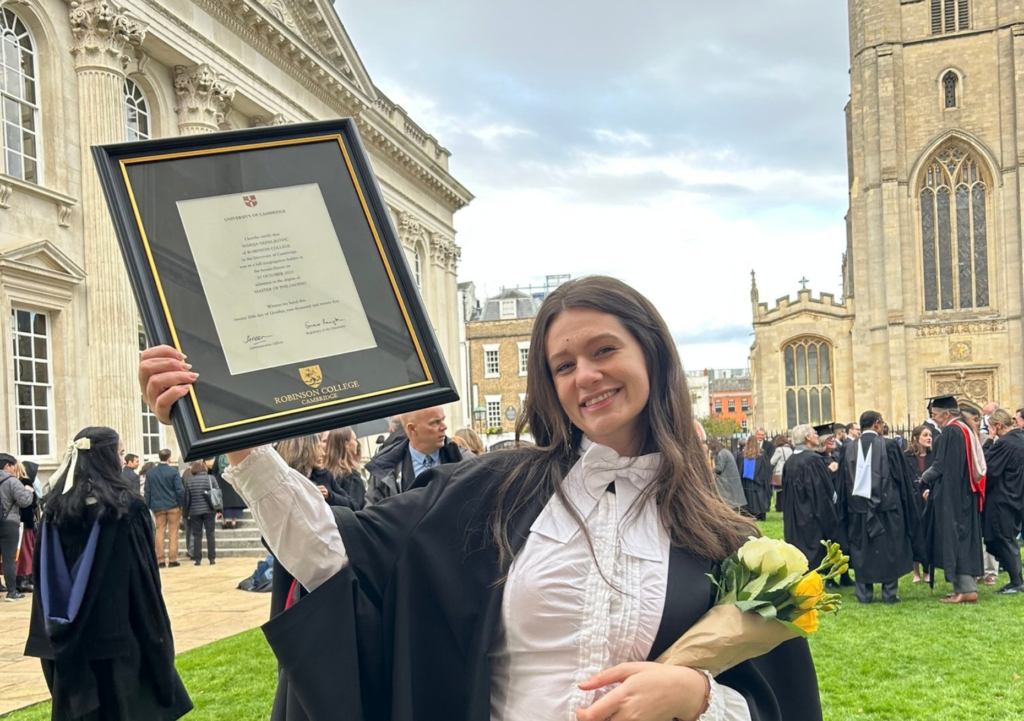
“Thanks to this shift in mindset, it wasn’t difficult for me to completely change my profession after returning — and even progress — as well as to start personal projects I might not have dared to pursue without my experience abroad.”
— Jovana
“Today, I am a bit more aware and more structured in everything I do. Professionally, I am more open to different approaches and work cultures, and I enjoy listening to others’ experiences and combining them with what I learned while living abroad.”
— Marko Stanković