When we first started talking to returnees more than five years ago, the topic of return most often began with a decision – whether to return, when, and why. Over time, however, the focus of these conversations naturally shifted, and we increasingly found ourselves talking about what comes after: everyday life that does not always look the way we imagined it would, habits that collide with a new/old environment, and emotions that were difficult to name.
Gradually, almost spontaneously through these conversations, the theme of reverse culture shock appeared, an experience some people only recognize while going through it, and others never identify it as such at all.
It was precisely from this continuity of work, research, and ongoing conversations with the community that the idea for the “Navigating the Return” workshop emerged — as an initiative rooted in the community and in the desire to explore this topic more deeply through direct work with those who live it.
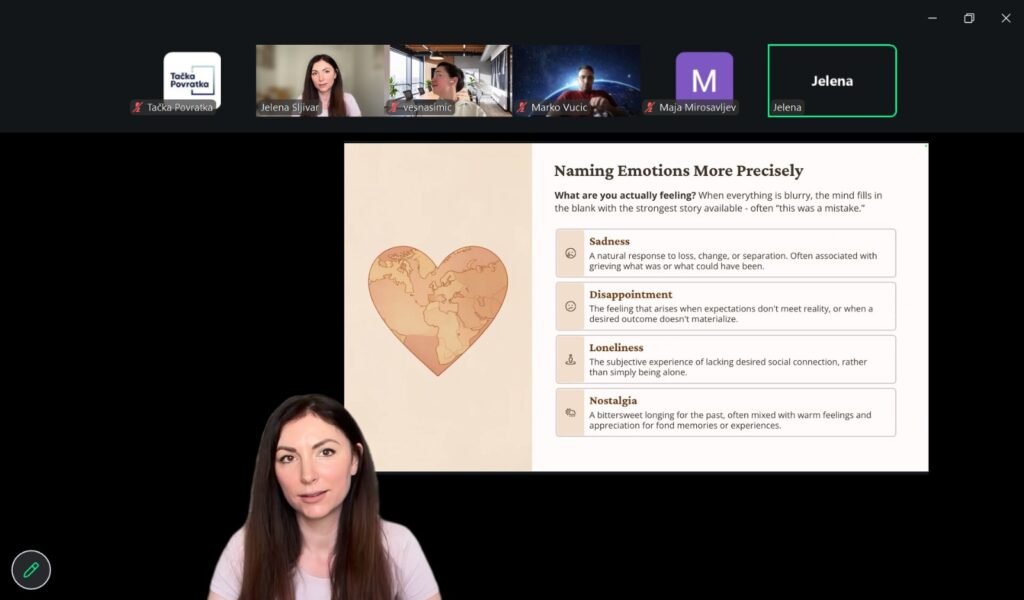
The workshop was held online on April 25, in a small group of participants who are at different stages of their return journeys. It was led by Jelena Šljivar, psychologist, IT Product Manager, and returnee, whom part of the community has already met through the podcast episode “The Psychology Behind Returning” and through previous Returning Point gatherings. What distinguishes Jelena’s approach is the way she combines professional understanding of adaptation processes with personal experience of return, across all its layers.
During the workshop, an atmosphere quickly formed in which the topic of reverse culture shock was opened through everyday situations — those small moments in which expectations and reality do not align the way we imagined them — as well as through questions that arise only once the return process is already underway.
Participants spoke about experiences that are rarely voiced in the context of return: the feeling of confusion in an environment that should feel familiar, the need to rebuild routine from the ground up, and those moments of disappointment that are perhaps the hardest to face. As experiences were shared, it became increasingly clear how many similar patterns exist, and for many, the most important part of this exchange was precisely the ability to voice their experiences and feel recognized within them.
What was once again clearly felt is how meaningful it is for people to have a space where they can share their experience, and through conversation with others recognize that many of the experiences they went through are not individual, but shared.
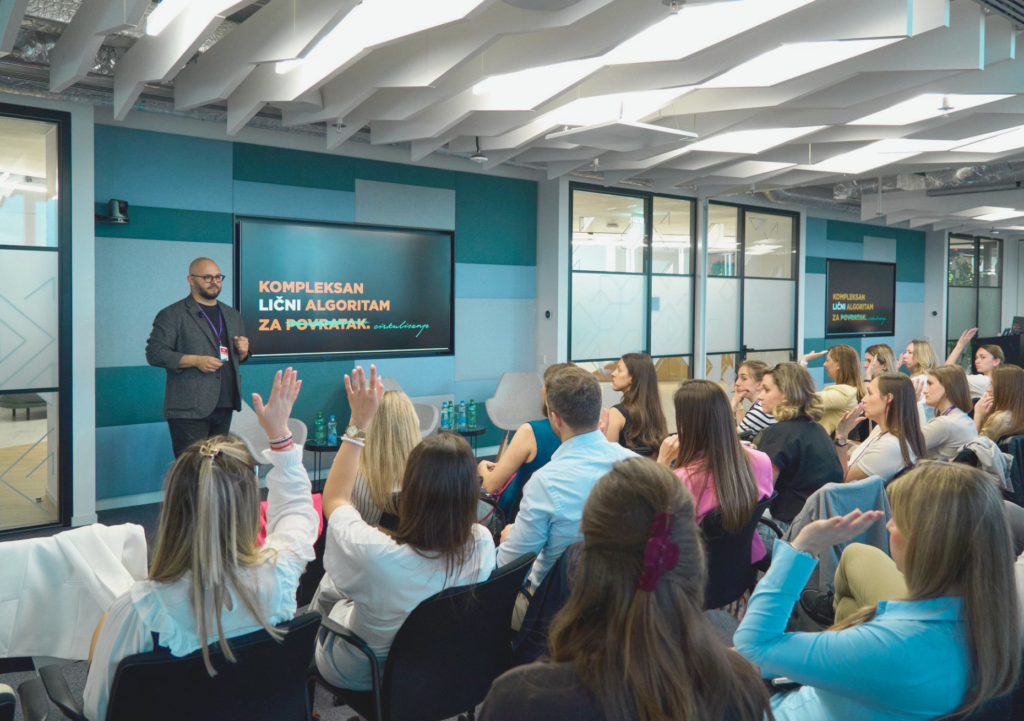
The “Navigating the Return” workshop is part of a broader cycle of activities that continues to evolve from our conversations with the community — through podcasts, guides, texts, and gatherings — with the aim of naming the return experience, bringing it closer, and making it less challenging for those going through it.