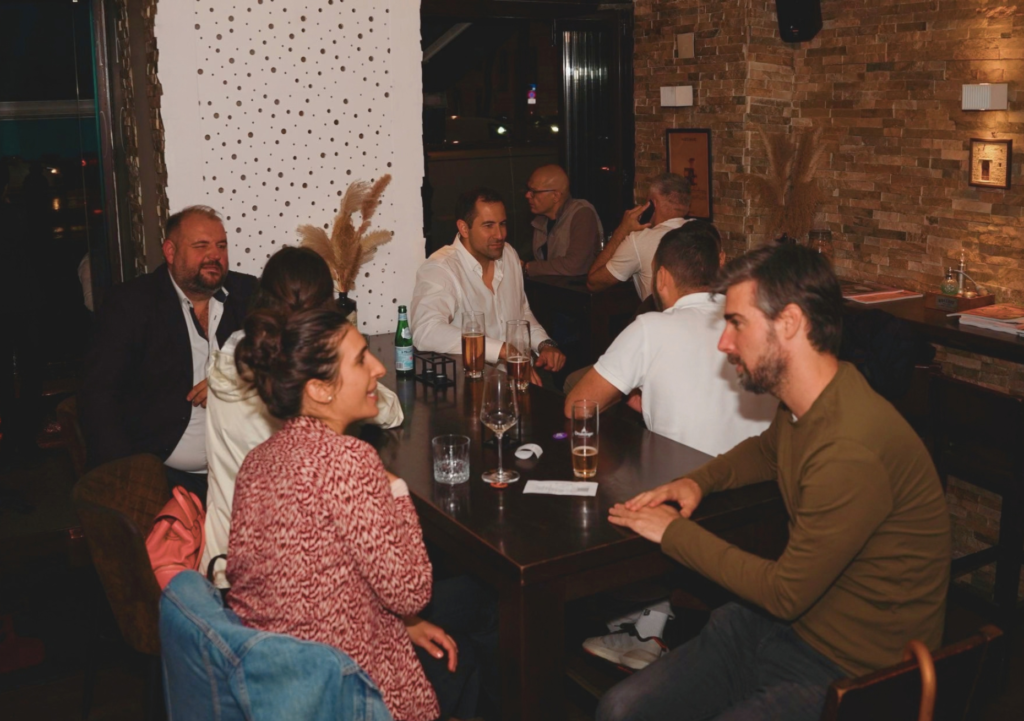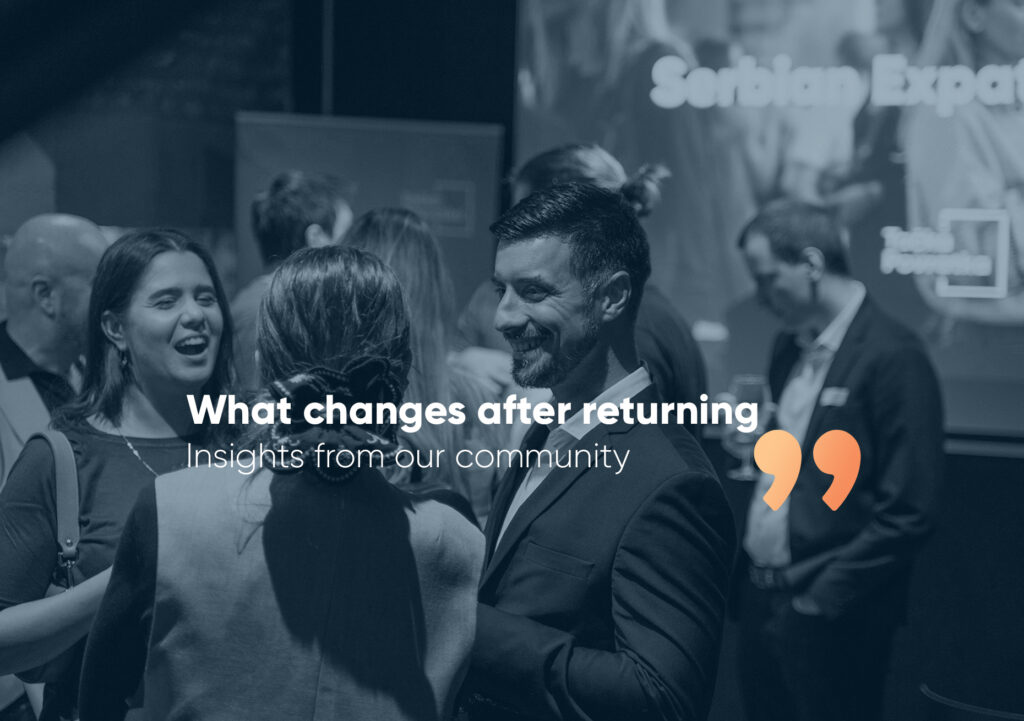
Belgrade, November 27th 2025 — Regional brainstorming sessions dedicated to circular migration were held at the Ložionica venue, organized by Returning Point, bringing together organizations, international experts, and institutions from Serbia, Montenegro, North Macedonia, Moldova, and Bulgaria, as well as international partners from UNDP, GIZ, WFD and the Western Balkans Fund.
The gathering was part of the preparatory activities for a regional cooperation process in the field of circular migration, aiming to strengthen collaboration and build a shared understanding of mobility trends that increasingly shape societies across the region.
The event was opened by Uroš Živković, Program Director of Returning Point, who emphasized the importance of a common understanding of mobility trends and of creating space for coordinated regional cooperation.
Understanding Circular Migration – Beyond Return
Mobility has long been part of the region’s history, but in an era of digital interconnectedness, circular migration takes on a new dimension: it is not merely a trend, but an opportunity for community development, knowledge exchange, and economic strengthening.
This vastness and complexity of the phenomenon were at the center of the keynote lecture delivered by Oxana Maciuca, international human mobility expert (UNDP Moldova). She presented contemporary definitions and trends in circular migration, highlighting that return represents only one segment of this mobility cycle. The data shared captured the attention of all participants — particularly the fact that around 20% of the population in Western Balkan countries lives outside their country of origin, while seasonal and short-term migration continues to grow each year.
With such trends in mind, the message was clear: states, local institutions, and organizations must be prepared for the challenges and opportunities that circular migration brings, in order to transform its potential into concrete benefits for local communities.
Oxana also emphasized that circular migration can be a “triple win” model — delivering benefits to migrants, countries of origin, and destination countries, provided that clear policies, reliable data, and communication channels with the diaspora are in place.
Key Topics: Data, Trust, and Stronger Involvement of Local Communities
Discussions throughout the sessions revealed that countries in the region face similar needs:
- better and more usable data, especially qualitative,
- stable communication between organizations and institutions,
- stronger involvement of local communities as key actors,
- transparent information that contributes to building trust — both among institutions and between communities and their diaspora.
Participants highlighted several examples showing that some solutions already exist — such as local migration profiles in Belgrade (Zvezdara) and Kikinda, diaspora guides in Veliko Gradište, Moldova’s experience with engaging returnees in local development, a “smart city” pilot project from Montenegro, and initiatives from Bulgarian municipalities to include returnees in local processes.
All these examples point to the same conclusion: communities can thrive when they have good information, clear mechanisms, and space for dialogue.
Why Collaboration Matters
A key takeaway was the importance of involving local institutions responsible for implementing migration policies, as sustainable circular migration models — and their development benefits — are difficult to achieve without their engagement.
Participants agreed on several priorities:
- strengthening local-level dialogue platforms,
- encouraging municipalities through pilot projects,
- expanding the availability of transparent information and involving communities in decision-making,
- mapping organizations and actors working on migration across the region, and
- exchanging relevant research, projects, and learning opportunities.
Special emphasis was placed on building trust among institutions and organizations, and between on-the-ground actors and members of the diaspora.
The regional brainstorming sessions in Belgrade confirmed that countries across the region face similar mobility trends, but also that there is strong willingness to turn these challenges into opportunities for development.
The event created space for new networking, knowledge sharing, and deeper cooperation, sending a clear message that successful migration policies rely on trust, data, and the active involvement of local communities.