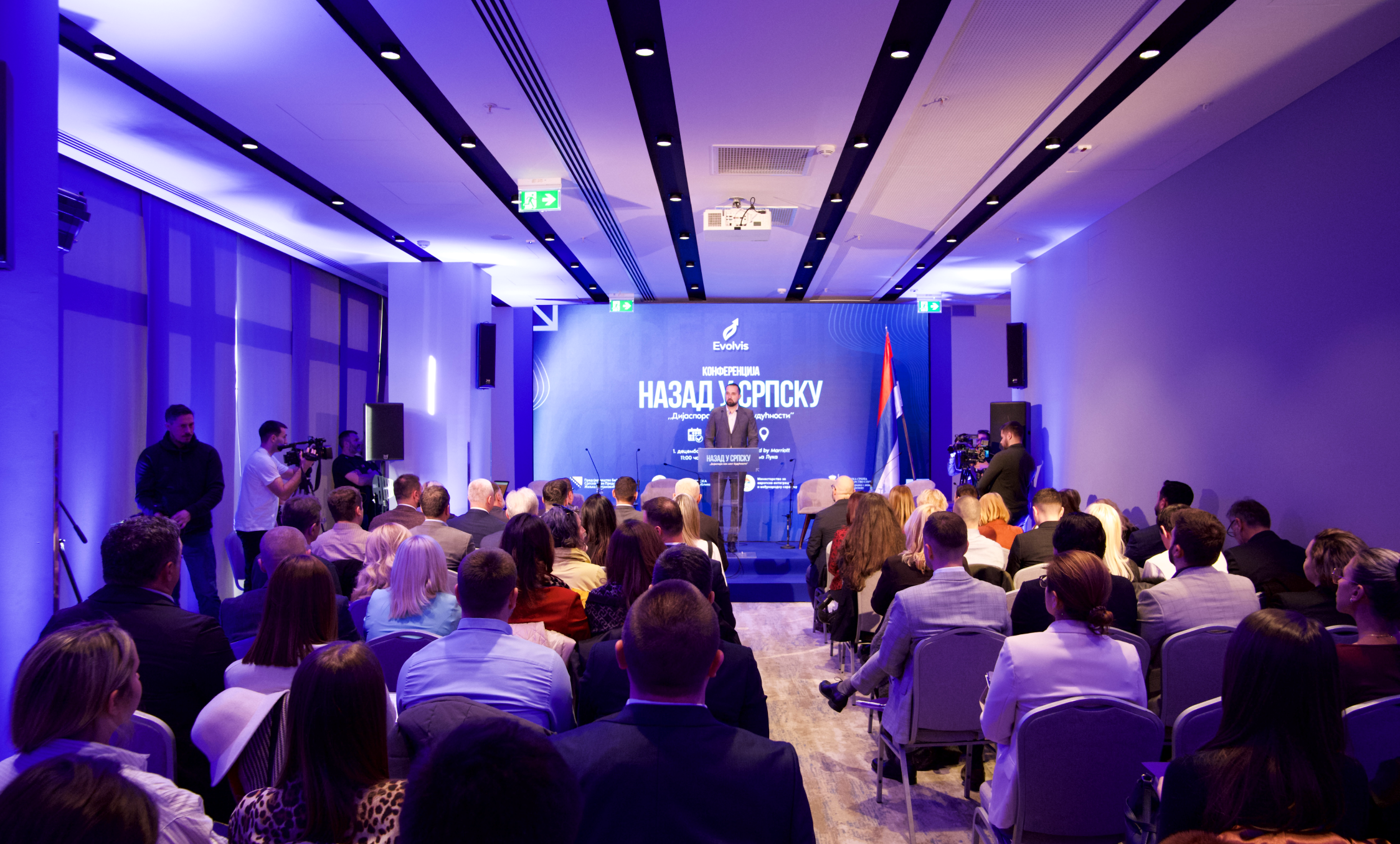
Banja Luka, December 1st 2025 — The conference “Back to Srpska: Diaspora as a Bridge to the Future” was held in Banja Luka, dedicated to strengthening ties with the diaspora and creating better conditions for return and life in Republika Srpska.
During the event, a new project to support circular migration and return was announced — starting next year it will be implemented by the civil-society organization Evolvis, with support from the Ministry for European Integration and International Cooperation of Republika Srpska. The project will follow the models developed by Returning Point, whose five years of experience and best-practice examples have already shown how coordination among local communities, state institutions, and civil organizations can turn migration into a real opportunity for development.
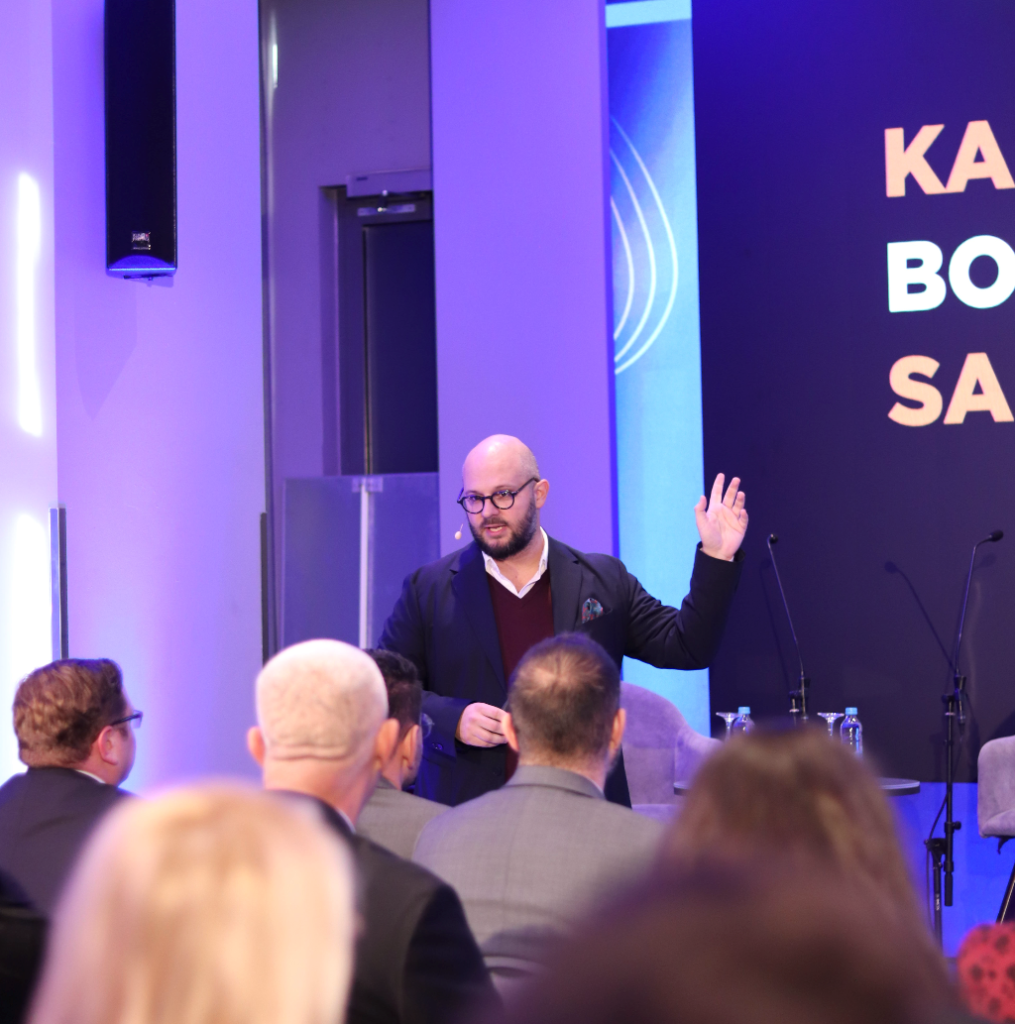
At the invitation of the organizers, in his keynote address, Uroš Živković, Director of Returning Point, emphasized the importance of institutional and inter-institutional cooperation in circular migration, especially when circular migration is approached as a strategic development tool. He highlighted that coordination among local communities, government institutions, and organizations enables migration and return to bring concrete benefits to communities.
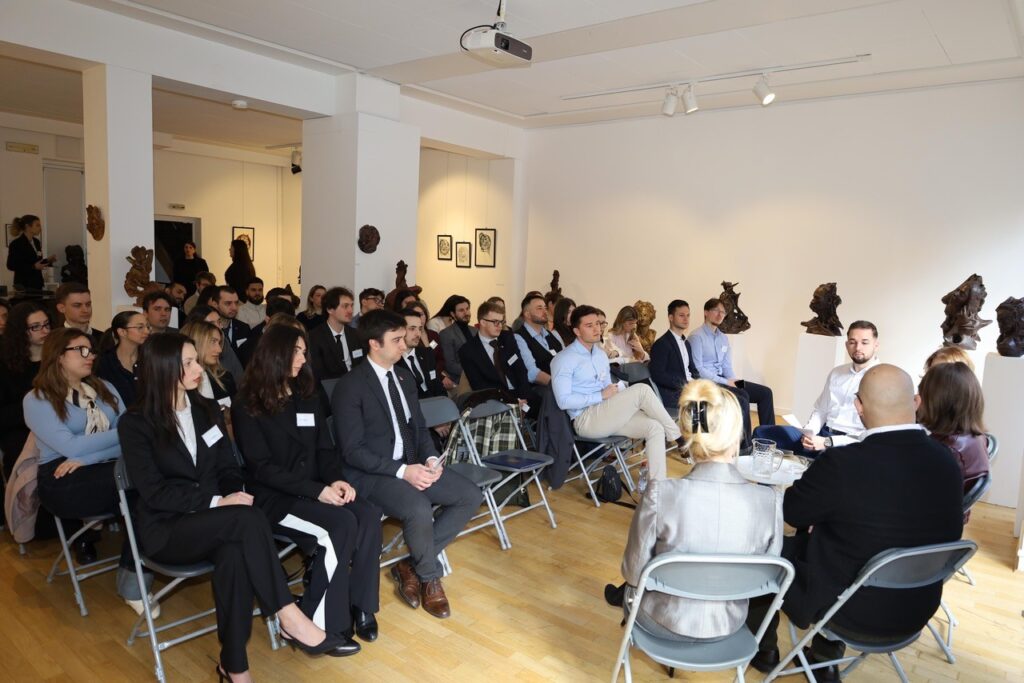
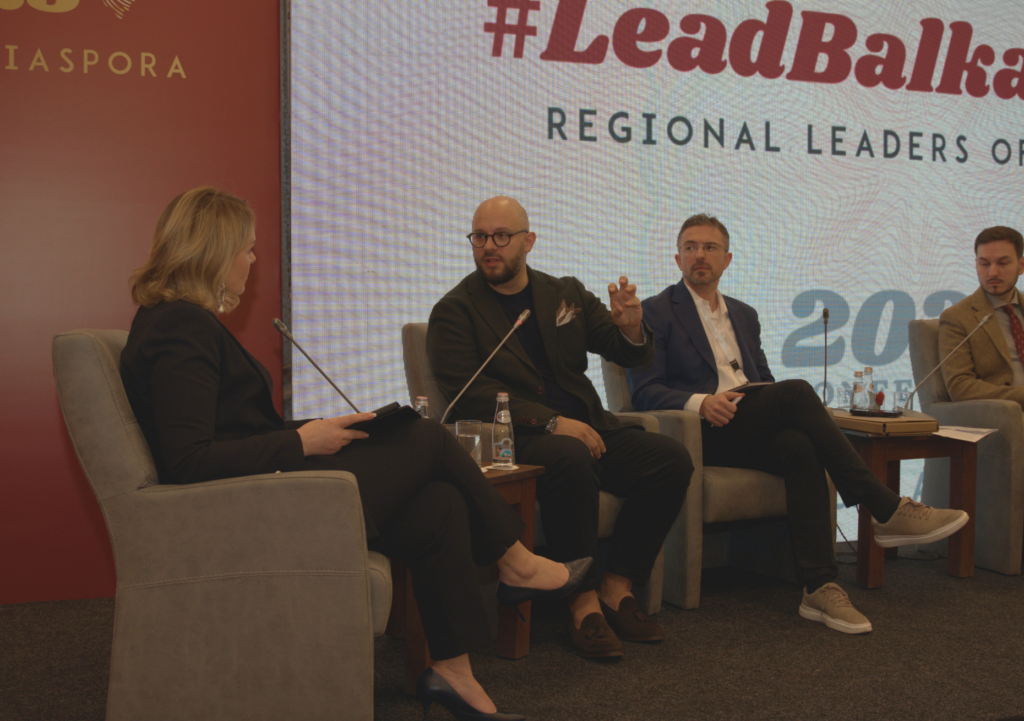
Returning Point was also invited to moderate a panel on institutional support for return — which included Mr. Zlatan Klokić (a minister in the Government of Republika Srpska), Mr. Vladimir Kokanović (Director of the Directorate for Cooperation with the Diaspora and Serbs in the Region, Republic of Serbia), and Adrijana Cicović (National Employment Service of Serbia). The panel discussed the necessity of cooperation across different ministries and agencies in the field of migration.
In a separate thematic panel, return motivation was presented through personal stories of returnees from Canada, the United States, and Europe — who are now working on successful projects in Republika Srpska, both in the private and public sectors.
For Returning Point, this is a particularly important moment, because the initiative in Republika Srpska demonstrates how essential it is to expand regional dialogue on circular migration — through new partnerships, knowledge exchange, and direct support for establishing efficient return mechanisms for our people, based on our experience working with thousands of returnees.